
Application
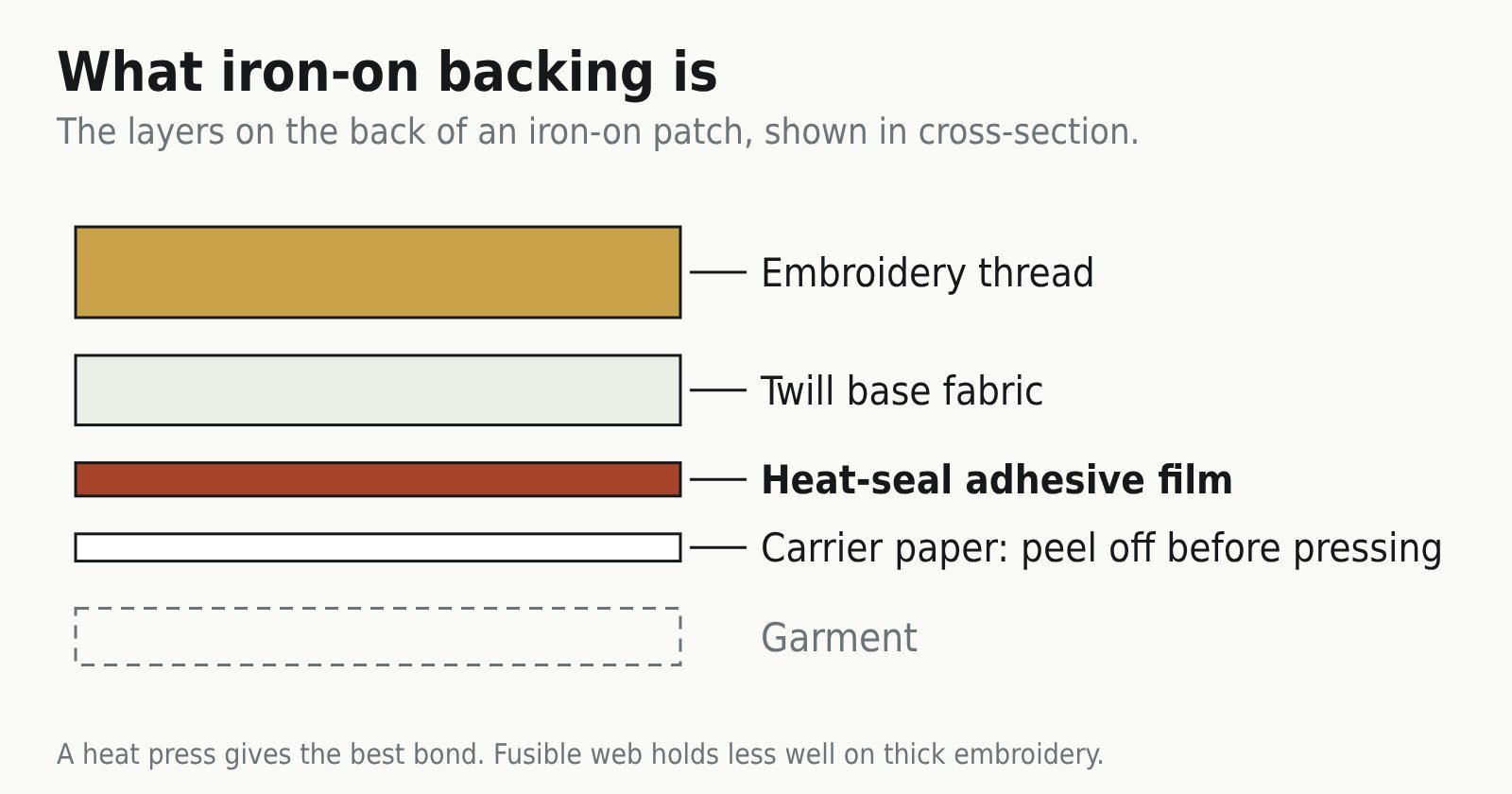
Iron-on backing for patches is the thin layer of heat-activated adhesive on the back of a patch. It is what lets an embroidered patch go on with an iron or a heat press instead of a needle. You can buy patches with it already fitted, or add it yourself to a plain sew-on patch.
Short answer. The best iron-on backing for patches is a heat-seal film (thermoplastic adhesive sheet) made for embroidery. Cut it to the patch shape, press it onto the back with a dry iron or heat press, peel off the carrier paper, then press the patch onto the garment. Fusible web from a sewing shop works for light patches but holds less well on thick embroidery.
The three kinds of iron-on backing
| Material | What it is | Good for | Limits |
|---|---|---|---|
| Heat-seal film | A thermoplastic adhesive sheet, the same backing factories use | Embroidered, woven and chenille patches on cotton and blends | Needs firm pressure; a heat press gives the best bond |
| Fusible web (paper-backed) | A web of adhesive fibres on release paper, sold for appliqué | Light woven patches and fabric appliqué | Thinner adhesive layer; can let go of thick embroidery |
| Fusible interfacing | Fabric coated on one side with adhesive | Stiffening a floppy patch or thin fabric | Designed to stiffen, not to bond a patch to a garment |
What to look for when buying iron-on backing
- Made for patches or embroidery, not just for appliqué — it will have a thicker adhesive layer.
- Heavy-duty or permanent on the label if the garment will be washed often.
- A clear temperature range on the pack; heat-seal films usually bond at about 300–320°F on a press.
- Paper-backed sheets are easiest to cut to shape and handle.
How to add iron-on backing to a patch
- Cut the backing slightly smaller than the patch — about 1–2 mm inside the edge — so adhesive does not squeeze out and show.
- Place it adhesive side down on the back of the patch, paper side up.
- Press with a dry iron on the cotton setting, or a heat press, for 8–10 seconds. You are only tacking it to the patch at this stage.
- Let it cool, then peel away the carrier paper. The back should now have a slightly glossy adhesive layer.
- Apply the patch to the garment as normal — see how to iron on a patch or heat press settings for patches.
Which garments iron-on backing works on
Heat-seal adhesive grips by flowing into the weave, so it needs a fabric that can take the heat and has an open weave: cotton, denim, canvas, twill and poly-cotton blends. It will not bond reliably to nylon, performance polyester, coated waterproofs or leather, and some of those melt first. The full list is in which fabrics can take an iron-on patch.
When to skip iron-on backing entirely
Heavy patches, chenille on wool, anything washed every week, and technical fabrics are all better sewn. Iron-on backing is a convenience, not a permanent bond — it softens slightly with each hot wash. Many people use it only to hold the patch in place and then stitch round the edge.
Common questions
What is the best iron-on material for patches?
A heat-seal film made for embroidery. It has a thicker adhesive layer than general fusible web and is what factory iron-on patches use.
Can I turn a sew-on patch into an iron-on patch?
Yes. Cut heat-seal film to shape, tack it to the back of the patch with an iron, peel the paper, and the patch is now iron-on.
How do I remove iron-on backing from a patch?
Warm it with an iron or hair dryer to soften the adhesive, then peel. What is left can be rolled off with a thumb or removed with an adhesive remover. The full method is in how to remove an iron-on patch.
Is iron-on backing permanent?
Not fully. It holds well on cotton for normal wear but softens a little every hot wash. Stitching the edge makes it permanent.
Have these made
More in this section: how to apply a patch — every application method, compared and step by step.
Need patches made?
We make embroidered, chenille, woven, leather and PVC patches to order — from $0.75 a patch, with a free digital proof before production and any backing you need.